ant lazdos paduodi arklio galvą, toji galva su vaivorykštiniais karčiais... kapitonė su tokia patC juosta ant rankos...
skandinavijoje vien kažkoks toksinis feminizmas ar lezbianizmas..

2019 metais biudžetai buvo 80 mln., 2020 - 69 milijonai ir toliau traukiasi.CFA boss George Koumas told a conference on the finances and future of Cypriot clubs that the topflight’s turnover is around €60 mln.
Cyprus Football Association’s latest report on club finances revealed that in 2021 First Division clubs lost a combined €15.5 mln. Half of the 12 topflight teams playing in this season’s First Division closed their books in the red, but €14.5 mln losses were absorbed by three clubs. APOEL Nicosia lost €9.3 mln. This is the highest loss made by a Cypriot team in a single season. APOEL is followed by arch-rivals and Cup Winners Omonia with losses of €3.24 mln. This year’s champions, Apollon Limassol, reported losses of €1.94 mln.
Prisijungė prie Nancy, iškritusio iš Ligue 2 Prancūzijoje.Kažkaip iš to stiliaus mitas tik likęstoks Čeburino stiliaus gynėjas, bet gal peraukštos lentynos žaidėjas
https://www.transfermarkt.co.uk/ibrahim ... ler/696598
„Šis sezonas ypatingas bus ir tuo, kad bus daugiau rungtynių televizijoje – apie 140. Ekonominė situacija nėra pati geriausia, bet stengiamės padėti klubams, kad jie neturėtų didelių problemų sezono metu, – kalbėjo „Betsafe-LKL“ lygos vadovas Remigijus Milašius.
Pasitikdama jubiliejinį 30-ąjį sezoną, Betsafe-LKL“ pratęsė bendradarbiavimą su tituliniu rėmėju<...> pagal naujai pasirašytą ilgalaikę sutartį tęsis dar bent trejus metus. Kaip sakė detalių nepanoręs atskleisti R. Milašius, tai – didžiausia sporto rėmimo sutartis Lietuvos istorijoje.
Jis negalėjo pasakyti, koks konkrečiai bus prizinis fondas, nes biudžetas kitiems metams bus tvirtinamas gruodžio mėnesį, tačiau neabejojo, kad jis bus didesnis: „Šį sezoną turime 12 komandų, tai automatiškai tas prizinis fondas didėja. Galbūt jis bus apie 700 tūkst., bet reikia palaukti gruodžio mėnesio, tuomet pasakysime, ką galime. Mano svajonių prizinis fondas yra milijonas eurų. Einame tuo keliu ir tikimės pasiekti.“
LKL prisistatė – naujovės turnyre, teisėjų darbe ir augsiantis biudžetas– išplėtėme peržiūros sistemos techninę įrangą. Anksčiau turėjome vaizdą iš keturių kamerų, dabar turėsime iš aštuonių kamerų. Galimybės bus geresnės teisingai įvertinti. Bus atsižvelgta ir į norą gauti vienokio ar kitokio aptariamo epizodo profesionalų vertinimą<...> bei pateikti viešą oficialią interpretaciją lygos vardu per ribotą laiką. Jei sekmadienį rungtynėse kažkas atsitiko, visi protestuoja, teisingai ar neteisingai, mes įsipareigojame kitos dienos metu pateikti viešą to epizodo interpretaciją“, – sakė lygos teisėjų direktorius Algimantas Pavilonis.
– Galbūt norite didinti komandų skaičių iki 14-os?
– Remigijus Milašius: Aš pasiėmęs žemėlapį galvojau, kur gali atsirasti nauja komanda. Tai gali įvykti Mažeikiuose, Plungėje, Marijampolėje. Mano vizija – 1 mln. eurų biudžetas. Panašiai dauguma klubų ir renka, nes daug kas gudrauja ir nesako iki galo.<...> Dar gali būti Kauno rajonas, jeigu ten nebūtų priešpriešos. Turbūt mūsų geografija ties tuo užsidaro, nes kiti regionai yra finansiškai silpni, kadangi nėra verslo ir sirgalių.<...>
– Ar tobulinote licencijavimo tvarką, kuri tikrai nėra tobula?
– Rasa Liuimienė: Taip, darėme. Pristatėme licencijavimo tvarkos pakeitimus, kurie susiję su aspektais, kai skolos viršija biudžetą. Turime 3–4 žingsnius, kaip įpareigoti klubus vykdyti įsipareigojimus. Detales atskleisiu, kai valdyba patvirtins dokumentą. Tikrai dirbame ta linkme. Kai prasidėjo licencijavimas, LKL valdyboje balsavo klubai, mes tik galime pasiūlyti. Galime pasidžiaugti tuo, kas padaryta nuo 2016 metų. Klubai patys balsavo ir įsipareigojo tos tvarkos laikytis. Mes esame priežiūros institucija tame procese. Tikimės pasiekti idealią tvarką.
Prancūzijos krepšinis kaip tik paskelbė preliminariai pasirašytų žaidėjų/trenerių algų biudžeto dydžius visiems lygoms klubams. Čia su visais mokesčiais, įdomu, kad visi* klubai po ketverto algų biudžetui skiria tarp 30 ir 33% surenkamų biudžetų, suteldami tarp 1 ir 2 milijonų eurų.Primenu "utopiją" – Amerikos, Australijos lygose futbole, Prancūzijos krepšinyje, kažkiek Italijoje, žaidėjų sąjungų derybų reikalavimais ne komercine paslaptimi tapo net ir baziniai visų lygos žaidėjų atlyginimai, kiekvieno klubo išlaidos žaidėjų algoms, ne ten kažkokios kontraktų trukmės. Įslaptinkite! – sako ne A Lygos klubų viršutinė galva Nevoina, bet žaidėjų sąjungos pirmininkas.


“There’s a shortage of skilled workers in many fields, including football. While most wish that the Hungarian youth system would produce better players, the reality is that we could not perform as well as we do now without foreign players. True Hungarian talents are rare and, as such, they are hugely overpriced – we can’t compete on wages with Bundesliga clubs,” he says, referring to the much richer German league.
This view comes against a backdrop of the Hungarian government’s attempt to use sport as a political tool to further a nationalist agenda. It’s estimated that over €2 billion has been spent on football since Orban came to power over a decade ago, with 11 new stadiums and a raft of new and renovated academies.
While the match-going experience has vastly improved, the caliber of footballers produced hasn’t yet, and the best quickly become sought-after, creating a dilemma for the local clubs: pay high to keep top local talent; or buy something equally as good from abroad. The majority choose the latter.
At Ferencvaros, a club historically known for its far-right leanings, it’s rare to see more than three Hungarians on the football field.
According to Hungary’s national sports paper Nemzeti Sport, for the first time more than half the minutes played in the Hungarian football league last season were played by players from overseas.
Aš šiai dienai bijau labiau bendro neigiamo ekonominio fono – arenų klausimo. Ta prasme, kad gali atsitikti ir taip, kad komandos bus, tačiau dėl elektros kainų kilimo jos negalės žaisti arenose. Bus per brangu „užkurti“ areną krepšinio rungtynėms – arenos prašys ženkliai didesnių pinigų už salės nuomą, o klubai nenorės jų mokėti. Čia gali atsirasti problemos – nebus kur žaisti.
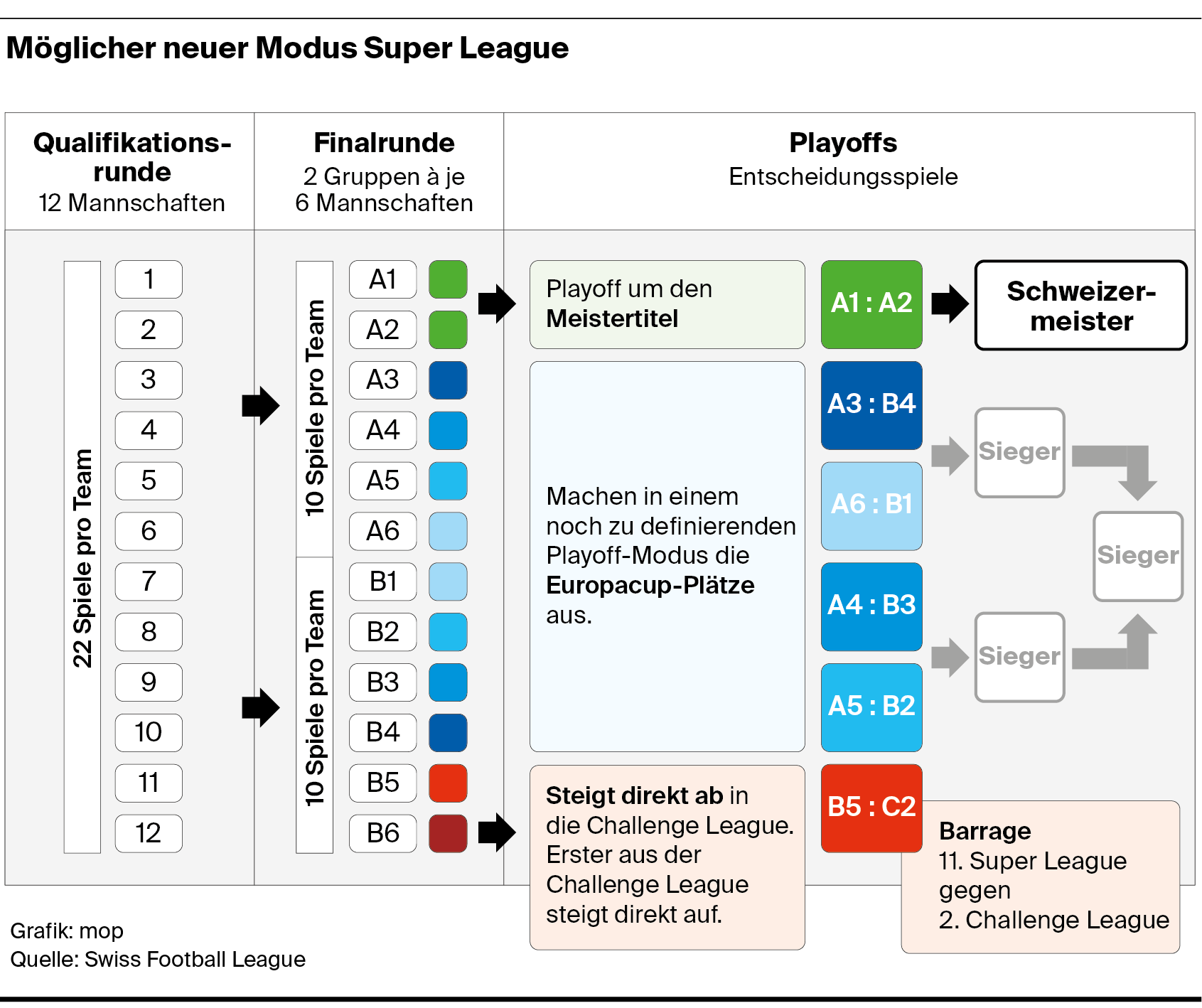
The current Super League mode has had its day. Too few areas of tension, too repetitive when the teams duel four times a season and the league is too small anyway with only ten clubs. After all, you can't expect clubs in the Challenge League to have 1A stadiums and professional structures if there is little prospect of a place in the Super League.
For a long time, the Super League clubs have resisted the increase, because they prefer to divide the TV revenues by ten rather than twelve clubs. Now, however, a rethinking has taken place. The committee of the Swiss Football League proposes a 12-team league from the 2023/24 season. The Challenge League, on the other hand, will continue to comprise ten teams.
The twelve teams each play each other twice. After that, the six clubs in the two groups will again play a home and away match against each other.
The championship will be decided in a play-off between the first and second place. The third phase is the real masterpiece of the new mode. It's the time for the ultimate thrill. Playoff is the magic word. For the teams in places three to ten, the season is not over after the second phase - they also fight in playoffs for the European Cup places. This means: Whoever is in twelfth and last place after the first phase still has the opportunity to qualify for the European Cup. This is called equal opportunities.